Az élet Velük... (S. E.)

Elhatároztam, hogy minden héten írok haza levelet…

Eljött az évzáró (november 13-a) és 6 órás volt... már épp készültem, hogy feladom, de inkább elfoglaltam magam: fényképeztem őket a bizonyítványaikkal meg a díjakkal a tanulmányi eredményeikért. A régióból jöttek mindenféle magas rangú képviselők, ők adták át a díjakat. A rendezvény alatt adományokat gyűjtöttek a cserkészek javára, hogy abból tudják majd fedezni az útjukat a következő versenyre, amire hétvégén indultak. A pénzgyűjtés úgy zajlott, hogy – szuahéliül – az egyik képviselő buzdította a gyerekeket, hogy kihez menjenek oda, kitől kaphatnak pénzt… Amikor az irányomba kezdett beszélni, és mindenki felém fordult – nos, kezdett derengeni, hogy ez most nekem szól.
Jó hosszan beszélt.
Jó hosszan nevetett mindenki. Így jól zavarba is jöttem.
Kész szerencse, hogy volt nálam pénz, különben a helyzet több lett volna, mint kínos:/. A rendezvény végén megvendégeltek minket: talán valami marhát ehettem (szőröstől-bőröstől), amit képtelenség volt megrágni, nemhogy lenyelni - de lelkesen ettem mellette a paradicsomot...

Egy másik nap csónakot csináltunk mindenféle termésből, és útnak eresztettük, versenyeztettük őket a kert végén található patakban. Úgy kellett a srácokat levadászni, hogy ne gázoljanak a patakba, mert Sister a háttérből azért rajtunk tartotta a szemét. Mivel időközben vége lett a sulinak, le kellett őket foglalni, mert 42 gyerek szétszedte volna a házat. Így be lettek osztva felváltva segíteni a ház körüli munkákban. Akik pedig nem segítettek, velük játszottam. Vittem nekik amerikai focit, hogy megszerettessem velük is a játékot.
Persze hogy nem érdekelte őket. Próbálták úgy használni, mint az európait – kevés sikerrel. De ez a labda volt az, ami túlélte őket. Egy hagyományos foci labdát 1 hét alatt leamortizáltak. Egyszer elindultam 9 gyerekkel amerikai focit játszani a fieldre. Annyira büszke voltam magamra. 12-vel tértem haza. Mondták, hogy figyelnem kell, mert szanaszét fognak széledni, hogy végre játszhatnak. Ezt én úgy értettem: senkit nem hagyhatok el. Szóval a végén mindenkit feltereltem az árvaházba, nem engedtem, hogy hazamenjenek azok sem, akik nem voltak árvák, és volt családjuk a faluban. Persze aztán ők szép csendben hazaindultak, mosollyal az arcukon: na, egy újabb lelkes mzungu. Mentségemre legyen mondva, hogy gyenge a név és az arcmemóriám.

Végre jutott idő a takarításra is, mert kezdtek elharapózni a dolgok az önkéntes szobában… utána megelégedéssel öntöttem magamra a fertőtlenítőt. És a gyerek ruhákat is megszellőztettük Sister kérésére, mert azoknak sem volt kellemes illata. Szokom a miserendet, ám mivel 2 órásak a szertartások, elhatároztam, hogy legalább ló lépésben, de járni fogok rájuk. Van abban valami megnyugtató, hallani az éneküket, beszélgetéseiket, látni őket a misén táncolni. Teljesen különbözik a nálunk megszokott miséktől. Valahogy ember közelibbnek tűnik, még ha fogalmam sincs, hogy mi az aznapi üzenete a prédikációnak. Sajnos itt is hallottuk a híreket a párizsi merényletekről, épp mikor kezdtem tervezgetni a kiberai látogatásom Kevinéknél.

Lassan megszokjuk egymást a gyerekekkel: már Eszternek hívnak és nem Enikőnek (aki az előző önkéntes volt), csak mosolyognak rajtam, amikor a vödörben próbálom egy heti szennyest kimosni, vagy négykézláb felmosok. De már feladtam, hogy tiszta legyek. Amikor kézzel esznek, vagy belenyúlnak a lefolyóban, vagy csak szépen az arcomba trüsszentenek – mivel még mindig nincs semmi bajom, már nem bánom. Ami azért még számomra is meglepő.

Olyan égszakadás volt egyik nap, hogy víz alá kerültünk (mióta megjöttem, jó sokat esik az eső). Itt nagyon örülnek az esőnek, hiszen a földből élnek az emberek, és jó hosszú száraz időszaknak vetett ez véget. Én meg lassan dezodorként használom a Ben 30-at…
Life with them... (S. E.)

I decided to write a letter home every week…

The school closing ceremony has come (13th November) and it lasted for six hours... I was already on the verge of giving up but instead, I chose to occupy myself, taking pictures of the children with their certificates and awards for their study accomplishments. All kinds of high-ranking representatives came from the region to hand over the awards. During the event, donations were collected for the scouts, to cover their trip to the next competition, to which they would leave for at the weekend. The money collection progressed as follows: one of the representatives was urging the children – in Swahili – pointing out whom they should address, from whom they can get money … When the representative began talking in my direction, and everybody turned towards me – well, it began to dawn on me that this bit is now addressed to me.
He talked for a fairly long time.
Everybody laughed for a fairly long time, too. And so, I was fairly well embarrassed.
By sheer luck, I had some money, otherwise the situation would have been more than painful:/. At the end of the event, they invited us to a meal: I think I probably hook-line-and-sinker ate some kind of beef, a “hard tack” which was impossible to chew through, let alone swallow – but I enthusiastically ate the tomatoes next to it...

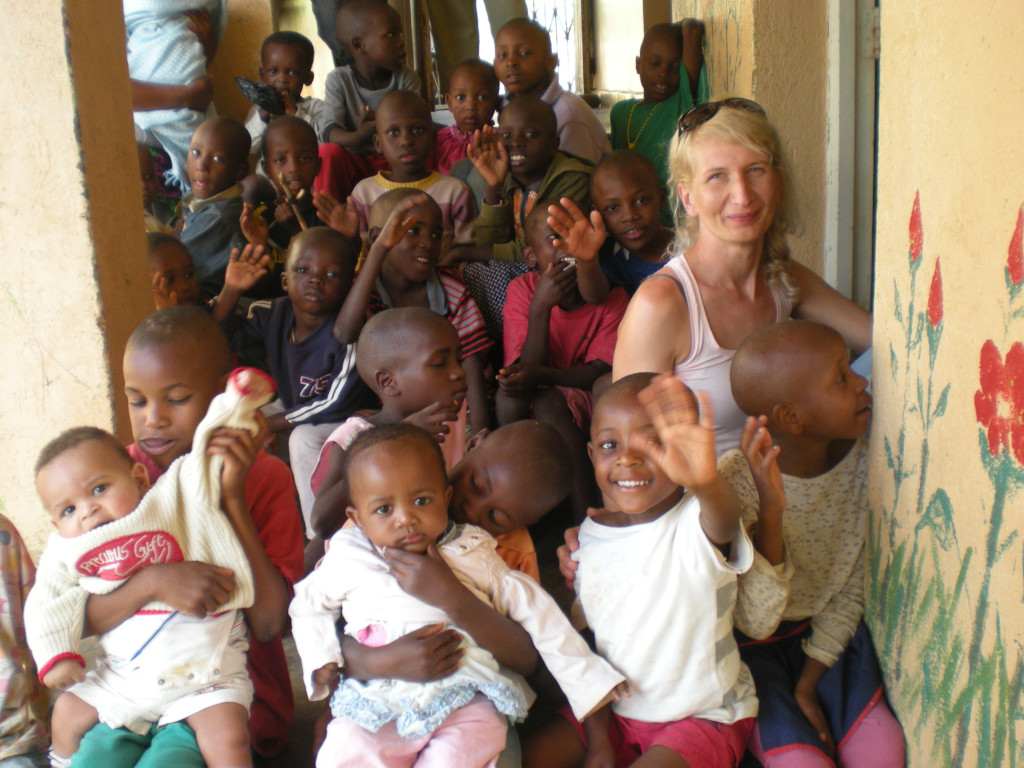
Another day, we made a boat out of all kinds of plant fruits and seeds, and let them float, engaging them in a competition in the brook running along the back of the garden. We had to practically hunt the tots down to prevent them from wading into the brook, while of course, Sister kept her eyes on us. Since in the meantime, the schoolyear had ended, we had to keep them occupied, or else the 42 kids would have taken the house apart. So, they were scheduled to take turns helping with the jobs around the house. I brought them an American football to get them to like this game. And sure enough, they were not interested. They were trying to use it like European football – with little success. Yet this was the football that survived them. As for the traditional footballs, they “amortized” one in a week. Once, I started out to the field with nine children to play American football. I was so proud of myself. I arrived back home with 12 children. I was told to pay attention to them, since they would disperse all over the place, finally getting the chance to play. I understood that to mean I can’t leave anyone behind. Thus, at the end, I ushered everyone up into the orphanage, not even letting the children who weren’t orphans but had families in the village go home. Of course, later they all set off for home, nice and quiet, with a smile on their face: well, well, another enthusiastic mzungu. I have to say in my favor that I have a very weak name and face memory.

We finally found time for cleaning, as well, with all the things “abounding” in the volunteer’s room … afterwards, I poured the disinfectant onto myself with great satisfaction. We also aired the children’s clothes upon Sister’s request, since they, too, did not have a pleasant smell. I’m getting used to the Mass order, but since the liturgies are two hours long, I decided that even if it only happens in a “knight’s move”, I will attend them. There is something relaxing about hearing them sing, talk, dance during the Mass. They are entirely different from the Masses we are used to. Somehow, they appear to be more human, even if I have no idea what the sermon’s message is for that day. Unfortunately, we too heard the news here about the Saint-Denis terrorist attacks in Paris, just as I was beginning to plan my visit to Kibera, Kevin’s family.

We are and the children are slowly getting used to each other: they are already calling me Eszter and not Enikő (the previous volunteer), merely smiling at me when I attempt to wash a week’s laundry in the bucket or when I mop the floor on all fours. But I’ve already given up being clean. When they eat with their hands, or poke into in the drain, or just “snizzle” into my face, sneezing just like that – since even now, there is nothing wrong with me, I don’t mind any more. Which is quite surprising for me, for sure.

One day, we had such a downpour that we submerged underwater (since I got here, it has been raining a lot. Here, people are very happy about the rain; after all, they live off their land, and this weather put an end to a rather long dry season. And I’m slowly getting used to Ben 30 as a deodorant …

A kis bicebóca (M. Panka)

Az egyébként életvidám Theresie napról napra jobban bicegett és egyre nagyobb fájdalmai voltak. A legközelebbi kórházban csupán abból állt a 4 éves kislány kezelése, hogy egész nap feküdnie kellett, és egy nagy nehezékkel húzták a lábát. Nem csoda hát, hogy 1 hónap elteltével mélabúsan jött haza a kórházból. Végül elküldtük a röntgenfelvételét egy itthoni orvos ismerősünknek, aki diagnosztizálta a betegséget. Kiderült, hogy teljesen tehermentesíteni kell a csípőjét, ami vagy mankóval, vagy járógéppel oldható meg. Bár sikerült egy mankót venni neki, és Sister Willy megtanította vele járni, továbbra is komoly gondot okozott számára a közlekedés és nem tudta kivenni részét a többi gyerekkel való játékból. Több heti szervezés után felvittük a fővárosba, ahol két hét alatt elkészült a személyre szabott járógépe. Az összeg (kb.60 ezer Ft), amit az alapítvány fizetett érte, egy átlagos kenyai embernek (pl. az árvaházi gondozóknak) több mint fél éves fizetése. A legtöbb kenyai gyerek tehát ebből a betegségből nagy eséllyel soha nem gyógyul ki és nem tanul meg újra fájdalom nélkül járni. Theresie viszont nem szomorkodik többet, le sem lehet törölni a mosolyt az arcáról, újra csacsog és játszik.

Az árvaház vezetője, Sister Willy mindeközben megállás nélkül dolgozott a földeken. Az egyik nap végén, amikor már sántított a sok munkától, Theresie meglátta és odaszólt neki: „Olyan vagy, mint én! Szólj Pankának, felvisz Nairobiba, majd lesz Neked is másik lábad és többé nem fog fájni.”

Reméljük, hogy két év múlva újra két egészséges lábon tud majd szaladni a kislány.

The little hopper (Panka M.)

The otherwise high-spirited Theresie limped increasingly every day, and her pains grew all the time. In the nearest hospital, the treatment for the four-year-old girl consisted merely of lying in bed all day while a big weight was pulling down her leg. So, it was no wonder that one month later, she came back from the hospital feeling very down. Finally, we sent her x-rays to one of our doctor friends in Hungary, who diagnosed her illness. As it turned out, her hips had to be completely relieved of any pressure, which could only be done with crutches or a walker. Although we managed to purchase crutches for her, and Sister Willy taught her how to walk with them, getting around still remained a problem for her, preventing her from participating in the games with the other children. After organizing it for weeks, we took her to the capital, where in two weeks, her personalized walker was completed. The sum of money that the foundation paid for it (about 60 thousand Forints or 185 USD), is more than half a year’s salary for an average Kenyan (for example, the orphanage’s caregivers). So, from this illness, Kenyan children likely never recover, never learning to walk again without pain. Theresie, however, doesn’t feel sad anymore; the smile on her face can’t be wiped off, she chatters and plays again.

In the meantime, the orphanage’s manager, Sister Willy, was working on the fields without a stop. At the end of one of these days, when she was already limping because of the huge workload, Theresie caught sight of her and called out to her: “You are like me! Call Panka, she will take you to Nairobi, then you will have another leg, too, and it won’t hurt anymore.”

We hope that in two more years, the little girl will be able to run about on two healthy legs again.

Fehér leszek (M. Zsuzsi)

Egy nap hazafele sétáltam Faustával, aki egyszer csak azt mondta nekem: "Egyszer elmegyek innen, megmosom az arcom, fehér leszek, és semmi mást nem teszek majd, csak chapatit (kenyai étel) eszem minden nap, minden ebédre, minden vacsorára."

Csak álltam és nem tudtam, mit mondjak... Sokkolt, hogy milyen gyermeki őszinteséggel tudja megfogalmazni, hogyan látja ő a fehér embert és ebben nem volt semmi bántó. Úgy gondoltam, hogy talán a legjobb, ha azt mondom neki: "Fausta, neked nem kell fehér emberré válnod azért, hogy mindig chapatit ehess, a bőröd színe gyönyörű. Tanulnod kell, hogy egyetemre mehess, hogy aztán jól képzett emberként jó munkád legyen, és akkor semmi akadálya nem lesz annak, hogy minden nap chapati kerüljön az asztalodra."

Később Sister Wilhelmina elmondta nekem, hogy Fausta elmesélte, mit hallott tőlem, és feltett szándéka, hogy nagyon jól tanuljon.


I will be white (Zsuzsi M.)

One day, I was walking home with Fausta, when suddenly she told me: "One day, I’ll go away from here, I’ll be white and I ’ll do nothing else but eat chapati (a Kenyan food) every day, for every lunch, every dinner."

I just stood there, not knowing what to say... I was shocked to hear with what a childlike honesty she could express how she saw white people, and there was nothing offensive about it. I thought the best thing to say to her would probably be this: "Fausta, you don’t have to become a white person to be able to always eat chapati, your skin color is beautiful. You have to study so that you can go to university, and then you can get a good job as a well-trained person. That way, there will be nothing to keep you back from having chapati on your table every day."

Later, Sister Wilhelmina told me that Fausta shared with her what she heard from me, and she is determined to be a good student.

Mzungu (T. Andi)

Kenyai tartózkodásom elején történt, amikor az ismerkedős fázisban voltunk a gyerekekkel. Bent ültünk a "játszós" szobában, épp egy rajzfilmet fejeztünk be. A kicsik is kezdtek beszállingózni a délutáni alvásból. Hallom, hogy kint az udvaron Zakaria engem hív. Persze nem nagyon tudta a nevemet, ezért csak így egyszerűen „le” mzungu-zott . Valaki mondhatta neki, hogy hol vagyok, mert álmos képpel megjelent az ajtóban. Mosolyával mindig levett a lábamról. Épp elkezdte volna újra mondani, hogy mzungu, mikor Mutuku felpattant a székéről, minden tekintélyét latba vetve a kis Zakari fölé tornyosult, és iszonyú szigorú arccal elkezdte neki magyarázni, hogy én NEM mzungu (idegen; vagy fehér ember) vagyok, hanem Andy. A nagy hőstette és lovagiassága után odaballagott hozzám és egy puszit nyomott az arcomra, amit azonnal viszonoztam.

Mzungu (Andi T.)

At the beginning of my Kenya sojourn, when I was in the getting-to-know-each-other phase with the children, the following happened: we were sitting inside the "playing" room, just about to finish watching a cartoon. After their afternoon naps, the absent little ones began slowly trickling into the room. I could hear that Zakaria was calling me from the courtyard outside. Of course, he didn’t really know my name, so he simply “mzungu”-ed me. Somebody must have told him where I happened to be because he appeared at the door wearing a sleepy face. He always swept me off my feet with his smile. Zakari was just about to start saying “mzungu”, when Mutuku popped up from his seat, towering above the little Zakari, asserting all his authority, and with a terribly stern face, began explaining to him that I am NOT a mzungu (stranger; or white person) but Andy. After his great heroism, Mutuku sauntered over to me and pressed a kiss onto my face, which I reciprocated right away.

Haszonjáték: teregetés (Kozalek Petra)

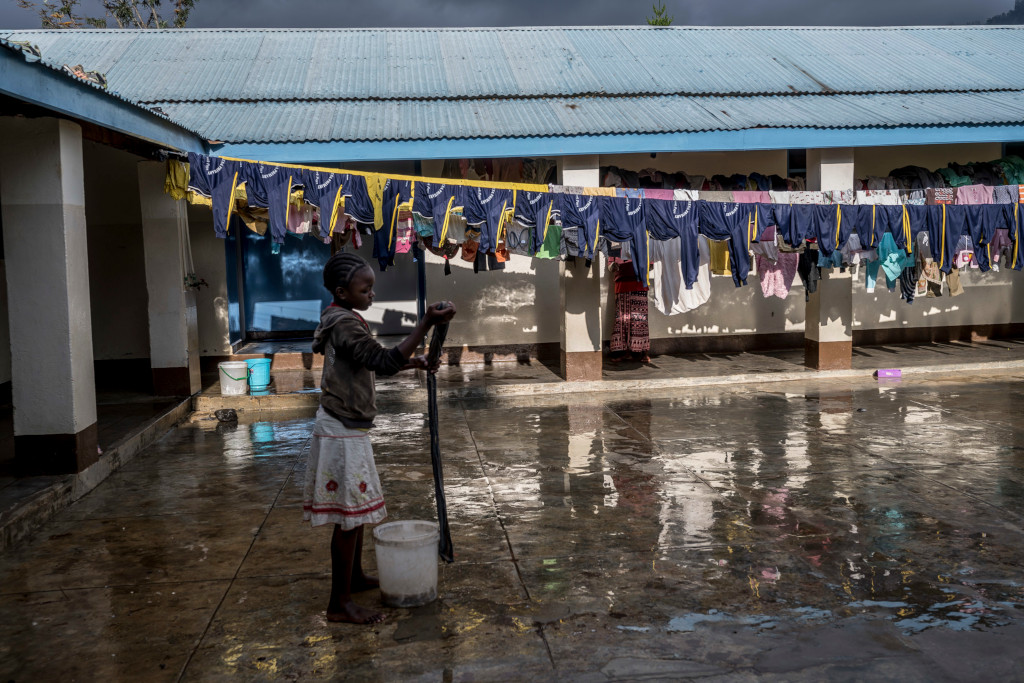
A mosónő mos, én öblítek, a gyerekek rohangálnak vagy játszadoznak az udvaron, egy viszont ott áll a combom mellett és okos szemekkel vizsgálja, hogyan tisztítják a felnőttek (mi) a ruhát. Társam énekelget mellettem, néha egy-két jó szóval jutalmazza a kreatív játékaikkal (botra kötözött fonál, gyufásdobozba rejtett kavicsok, szatyorba csomagolt labda) berohanó, ujjongó csöppségeket, vagy nevel, ha valaki árulkodva, panaszkodva, sírva berohan. Egy-egy bölcs szót mond csupán (mint öreganyám gyermekkoromban), és a gyerek lenyugszik, újrakezdi a játékot. Mi néha nevetünk rajtuk, s én igen gyakran rámosolygok kis társunkra, aki már kileste a mosás összes fortélyát, már tudja, mikor jön az a rész, amikor a tiszta ruhával teli vödör a szárítókötél irányába tart. Ekkor eltűnik, s pólócskáján sorbarakott (színek szerint válogatott) csipeszekkel tér vissza, ügyes kis kezével leutánozza a víz kicsavarását, kezembe adja, hisz ő még nem éri el a kötelet, de segíteni szeretne, velem lenni. A többiek pedig erre az időszakra elfelejtik az apró harcokat, az éneklést, a táncot, s ők is jönnek, már hat pici fekete fej les a vödörbe, minden kézben egy ruha kortól függetlenül (másfél éves gyerektől négy évesig), és csak csavarnak, rohannak hozzám, sorban állva nyújtják a ruhát, s közben izgatottan körbemosolyognak. Így alakul játékká a házimunka.

Udefulness game: hanging up the laundry (Petra Kozalek)

The laundry woman is washing, I’m rinsing, the children are running around or playing in the courtyard, but one of them is standing next to my thigh, examining with clever eyes how the adults (us) are cleaning the clothes. My companion is singing away next to me, sometimes awarding with a few good words the rejoicing little ones dashing in with their creative games... (yarn tied onto a stick, pebbles hidden in a matchbox, ball packed into a plastic bag), or educating them when one of them rushes in blabbing, complaining, crying. She merely says one or two wise words (like my old Gran in my childhood), and the child calms down, starting to play again. We sometimes laugh at them, and very frequently, I smile at our little buddy who has already fished out all the tricks of washing, already knowing when it’s time for the part with the bucket full of clean laundry heading towards the drying line. Then he disappears, returning with clips lined up in order (selected according to colors), imitating the wringing of water, handing them to me, since he can’t reach the line yet, but still would like to help, to be with me. And during this period, the others forget about their minute fights, their singing and dancing, and they are coming, too, I already have six tiny black heads peeping into the bucket, every hand holding a piece of clothing, independently of their age (from one and a half year old to four-year-old), and they are just wringing, rushing to me, standing in line to reach me the clothes, excitedly smiling round and round during all this. This is how housework turns into a game.