Digital orphanage - Barni
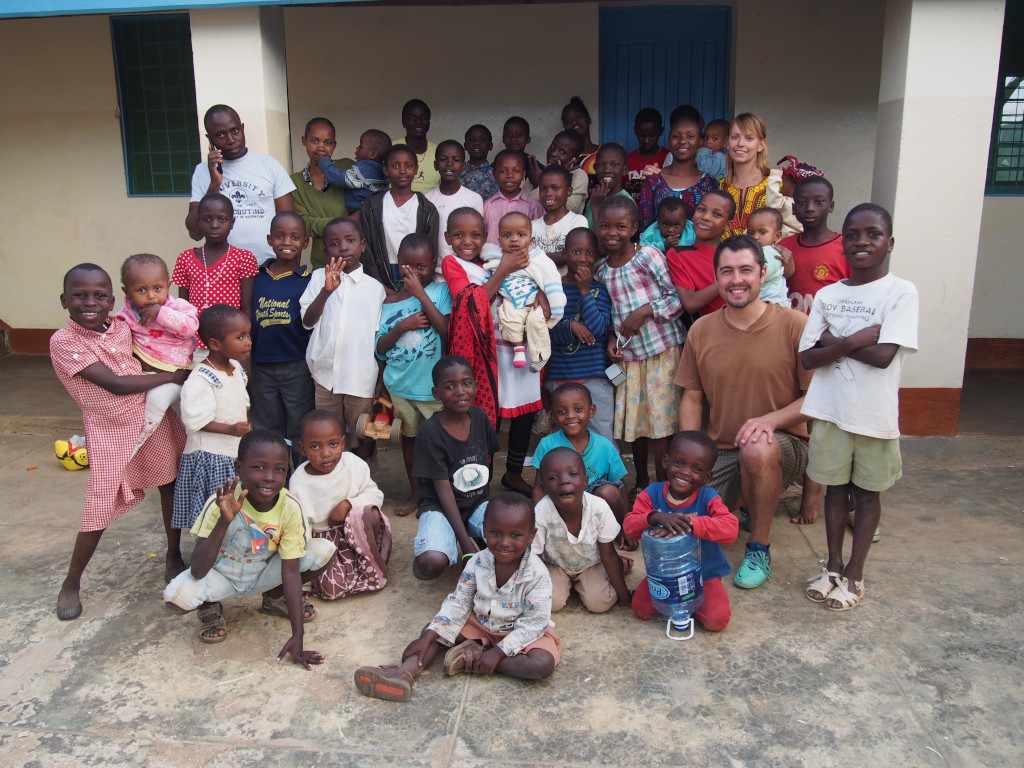
For the almost four weeks I spent in the orphanage in July 2017, I aimed to establish a good quality internet connection for the orphanage, as well as teaching the children the basics of how to use computer technology and the internet.
During the construction work, the children helped me a lot; e.g., they held the ladder I stood on when I drilled holes – with the hand drill I got from the village carpenter – into the outer wall of the orphanage to secure the modem for creating the internet connection, and they were the ones to lead the network cables through the attic, where – due to my adult size – moving around presented its own challenge.
As soon as the internet connection was established, for the first time in the orphanage’s history, an orphan and his Hungarian patroness could get in contact: in the video call, Peter Ngila said ’thank you’ to Nóri Horváth for his birthday present, which was a wristwatch that I brought down from Hungary, and he also asked Nóri to show her apartment to him. Up until that moment, the children and their patrons communicated entirely in the form of paper-based letters, which the volunteers carried during their comings and goings. A lot of children learned how to connect the different computer devices, and I taught those who were interested the basics of how to write emails. These children also exchanged emails with their patrons, in which, among other things, they sent pictures to each other.
In the evenings, we frequently watched entertaining popular-science cartoons with the kids, which I downloaded from the internet. The children’s favorite episode was when the main character, a little girl, learned place values by means of counting rats. The children quickly learned the song that the rats were singing in the cartoon, and went on singing it during the day.
Out of the 2 kg of ground poppy seed that I brought down from Hungary, we twice cooked a poppyseed pasta lunch. On the first occasion, the children mixed the pasta with the poppyseed as I showed them to do; on the second occasion, however, they first ate the pasta on its own, and as for the poppyseed that they only called ”the black”, they filled it into plastic cups, licking it out of them. It is the same as with jam bread, which they consume by first licking the jam off the top – and only then do they eat the slice of bread.
On Sunday afternoons, Szilvi (the other volunteer) and I took the kids to the village football field, where they grouped up with the village children, and the 20 to 30 children distributed their gang into two groups, including us, as well. Of course, Szilvi and I couldn’t keep their distribution in mind; during the game, we tried guessing from the children’s movements which of them were with us and which of them against us. A lot of children played barefoot, some of the girls wore dresses, and because of the great devotion to the game, very frequently they did not play nice with each other.
During the almost one-month residence at the orphanage, I acquired momentous experiences; I have been trying to keep in touch with the children ever since, always sending some kind of a gift to them all via the volunteer scheduled to travel to them.